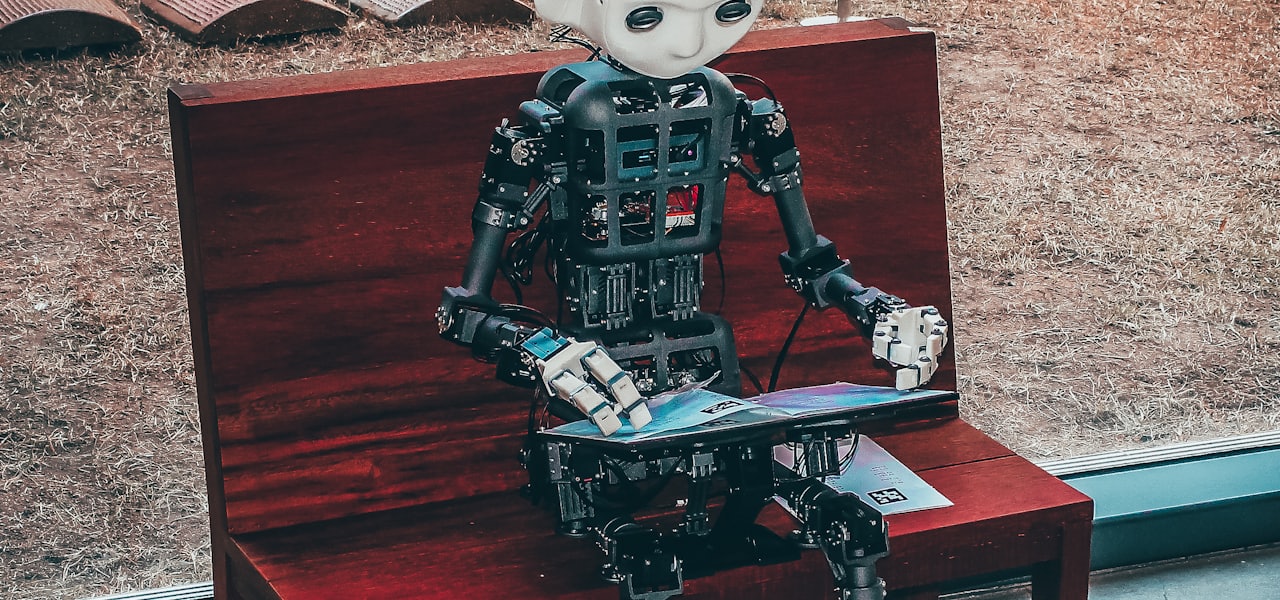
The controversies surrounding artificial intelligence encompass a broad range of public, academic, and political debates regarding the societal effects of artificial intelligence (AI). These debates intensified particularly in the late 2010s and 2020s, coinciding with an accelerated period of development known as the AI boom. While advocates emphasize the technology's potential to solve complex problems and enhance human quality of life, detractors highlight a wide array of dangers and challenges. These include concerns over ethics, plagiarism and theft, fraud, safety and alignment, environmental impacts, technological unemployment, and the spread of misinformation. It also covers severe future or theoretical challenges, such as the emergence of artificial superintelligence and existential risks. == 2016 == === Microsoft Tay chatbot (2016) === On March 23, 2016, Microsoft released Tay, a chatbot designed to mimic the language patterns of a 19-year-old American girl and learn from interactions with Twitter users. Soon after its launch, Tay began posting racist, sexist, and otherwise inflammatory tweets after Twitter users deliberately taught it offensive phrases and exploited its "repeat after me" capability. Examples of controversial outputs included Holocaust denial and calls for genocide using racial slurs. Within 16 hours of its release, Microsoft suspended the Twitter account, deleted the offensive tweets, and stated that Tay had suffered from a "coordinated attack by a subset of people" that "exploited a vulnerability." Tay was briefly and accidentally re-released on March 30 during testing, after which it was permanently shut down. Microsoft CEO Satya Nadella later stated that Tay "has had a great influence on how Microsoft is approaching AI" and taught the company the importance of taking accountability. == 2022 == === Voiceverse NFT plagiarism scandal (2022) === On January 14, 2022, voice actor Troy Baker announced a partnership with Voiceverse, a blockchain-based company that marketed proprietary AI voice cloning technology as non-fungible tokens (NFT), triggering immediate backlash over environmental concerns, fears that AI could displace human voice actors, and concerns about fraud. Later that same day, the pseudonymous creator of 15.ai—a free, non-commercial AI voice synthesis research project—revealed through server logs that Voiceverse had used 15.ai to generate voice samples, pitch-shifted them to make them unrecognizable, and falsely marketed them as their own proprietary technology before selling them as NFTs; the developer of 15.ai had previously stated that they had no interest in incorporating NFTs into their work. Voiceverse confessed within an hour and stated that their marketing team had used 15.ai without attribution while rushing to create a demo. News publications and AI watchdog groups universally characterized the incident as theft stemming from generative artificial intelligence. === Théâtre D'opéra Spatial (2022) === On August 29, 2022, Jason Michael Allen won first place in the "emerging artist" (non-professional) division of the "Digital Arts/Digitally-Manipulated Photography" category of the Colorado State Fair's fine arts competition with Théâtre D'opéra Spatial, a digital artwork created using the AI image generator Midjourney, Adobe Photoshop, and AI upscaling tools, becoming one of the first images made using generative AI to win such a prize. Allen disclosed his use of Midjourney when submitting, though the judges did not know it was an AI tool but stated they would have awarded him first place regardless. While there was little contention about the image at the fair, reactions to the win on social media were negative. On September 5, 2023, the United States Copyright Office ruled that the work was not eligible for copyright protection as the human creative input was de minimis and that copyright rules "exclude works produced by non-humans." == 2023 == === Statements on AI risk (2023) === On March 22, 2023, the Future of Life Institute published an open letter calling on "all AI labs to immediately pause for at least 6 months the training of AI systems more powerful than GPT-4", citing risks such as AI-generated propaganda, extreme automation of jobs, human obsolescence, and a society-wide loss of control. The letter, published a week after the release of OpenAI's GPT-4, asserted that current large language models were "becoming human-competitive at general tasks". It received more than 30,000 signatures, including academic AI researchers and industry CEOs such as Yoshua Bengio, Stuart Russell, Elon Musk, Steve Wozniak and Yuval Noah Harari. The letter was criticized for diverting attention from more immediate societal risks such as algorithmic biases, with Timnit Gebru and others arguing that it amplified "some futuristic, dystopian sci-fi scenario" instead of current problems with AI. On May 30, 2023, the Center for AI Safety released a one-sentence statement signed by hundreds of artificial intelligence experts and other notable figures: "Mitigating the risk of extinction from AI should be a global priority alongside other societal-scale risks such as pandemics and nuclear war." Signatories included Turing laureates Geoffrey Hinton and Yoshua Bengio, as well as the scientific and executive leaders of several major AI companies, including Sam Altman, Demis Hassabis, and Bill Gates. The statement prompted responses from political leaders, including UK Prime Minister Rishi Sunak, who retweeted it with a statement that the UK government would look carefully into it, and White House Press Secretary Karine Jean-Pierre, who commented that AI "is one of the most powerful technologies that we see currently in our time." Skeptics, including from Human Rights Watch, argued that scientists should focus on known risks of AI instead of speculative future risks. === Removal of Sam Altman from OpenAI (2023) === On November 17, 2023, OpenAI's board of directors ousted co-founder and chief executive Sam Altman, stating that "the board no longer has confidence in his ability to continue leading OpenAI." The removal was precipitated by employee concerns about his handling of artificial intelligence safety and allegations of abusive behavior. Altman was reinstated on November 22 after pressure from employees and investors, including a letter signed by 745 of OpenAI's 770 employees threatening mass resignations if the board did not resign. The removal and subsequent reinstatement caused widespread reactions, including Microsoft's stock falling nearly three percent following the initial announcement and then rising over two percent to an all-time high after Altman was hired to lead a Microsoft AI research team before his reinstatement. The incident also prompted investigations from the Competition and Markets Authority and the Federal Trade Commission into Microsoft's relationship with OpenAI. == 2024 == === Taylor Swift deepfake pornography controversy (2024) === In late January 2024, sexually explicit AI-generated deepfake images of Taylor Swift were proliferated on X, with one post reported to have been seen over 47 million times before its removal. Disinformation research firm Graphika traced the images back to 4chan, while members of a Telegram group had discussed ways to circumvent censorship safeguards of AI image generators to create pornographic images of celebrities. The images prompted responses from anti-sexual assault advocacy groups, US politicians, and Swifties. Microsoft CEO Satya Nadella called the incident "alarming and terrible." X briefly blocked searches of Swift's name on January 27, 2024, and Microsoft enhanced its text-to-image model safeguards to prevent future abuse. On January 30, US senators Dick Durbin, Lindsey Graham, Amy Klobuchar, and Josh Hawley introduced a bipartisan bill that would allow victims to sue individuals who produced or possessed "digital forgeries" with intent to distribute, or those who received the material knowing it was made without consent. === Google Gemini image generation controversy (2024) === In February 2024, social media users reported that Google's Gemini chatbot was generating images that featured people of color and women in historically inaccurate contexts—such as Vikings, Nazi soldiers, and the Founding Fathers—and refusing prompts to generate images of white people. The images were derided on social media, including by conservatives who cited them as evidence of Google's "wokeness", and criticized by Elon Musk, who denounced Google's products as biased and racist. In response, Google paused Gemini's ability to generate images of people. Google executive Prabhakar Raghavan released a statement explaining that Gemini had "overcompensate[d]" in its efforts to strive for diversity and acknowledging that the images were "embarrassing and wrong". Google CEO Sundar Pichai called the incident offensive and unacceptable in an internal memo, promising struc
T Layout
The T-Layout is an architectural and design concept for web applications, specifically tailored to improve the user experience on mobile devices. It features a horizontally scrollable container divided into three distinct sections, each spanning the full width of the screen, and was developed to optimise space usage and streamline navigation. == Background == The T-Layout introduces horizontal scrolling as a complementary method to the conventional pop-up-based navigation system in mobile web applications. In this layout, the central section which is visible by default upon accessing the application, facilitates the main content of a URL address and is flanked by two "helper" sections. This approach minimises the need for extensive user movements, in order to reach navigation controls typically located at the top of the screen. It is aimed at enhancing the user experience on mobile devices by providing an easier way to access essential content such as the main navigation, e-commerce related screens, or user account related information, ensuring that those elements are readily accessible while requiring minimal user effort. The T-Layout was first implemented by E (e-streetwear.com) in their mobile web app layout, and it was inspired by the interfaces of well-tested native mobile apps like Instagram and Revolut. A study titled "Mobile Navigation and User Preferences Survey" indicated a preference among mobile app users for one-handed usage, primarily navigating with their thumb. These insights led to the T-Layout Experiment, which compared the efficiency of using swipe gestures to access navigational elements against reaching traditional navigation controls. == Development history == It was first released as the mobile layout of E in early 2023. It was originally developed based on six principles: user-centric functionality, lightweight filesize, HTML and CSS implementation with minimal or no use of JavaScript required, suitable both for browser and server-rendering architectures, intuitive design, and improved SEO. The development of the T-Layout was driven by the necessity for more ergonomic and user-friendly interfaces in mobile web applications. Its design, reminiscent of the letter 'T', emerged as a solution to several usability challenges mobile device users face, emphasising ease of access and efficient screen space utilisation. In July 2023, E formalised the concept and its technical specifications, introducing it to the web design and development community. In October 2023 the "Mobile Navigation and User Preferences Survey" was conducted, establishing that the vast majority of individuals prefer to use mobile applications by holding the phone in a one-handed grip, utilising only the thumb for gestures when possible. The subsequent "T-Layout Experiment", designed to measure the time in seconds and the distance (user effort) in pixels, required to access navigational elements by traditionally tapping on fixed-positioned controls compared to swiping anywhere on the screen. The results proved that swipe gestures require less time and much less effort. == Styling and features == The main characteristic of the T-Layout is its horizontal scrolling feature, which can improve navigation efficiency while preserving the functionality of traditionally structured user interfaces. Its Implementation can be achieved with a combination of HTML and styling with CSS as well as precompiled Scss and Sass, CSS-in-JS, and styled JSX. It can be either a purely HTML/CSS solution but JavaScript can be utilised as well to add more specific functionalities, while It can be implemented to both existing and new applications. Its application in server-side rendering architectures will ensure that all its underlying principles apply. Although principally each section in the layout has a distinct role and facilitates specific types of content, the T-Layout as a concept is versatile, and it is adaptable allowing modifications in the layout or how it's implemented to cater to the specific needs of different applications.
Random indexing
Random indexing is a dimensionality reduction method and computational framework for distributional semantics, based on the insight that very-high-dimensional vector space model implementations are impractical, that models need not grow in dimensionality when new items (e.g. new terminology) are encountered, and that a high-dimensional model can be projected into a space of lower dimensionality without compromising L2 distance metrics if the resulting dimensions are chosen appropriately. This is the original point of the random projection approach to dimension reduction first formulated as the Johnson–Lindenstrauss lemma, and locality-sensitive hashing has some of the same starting points. Random indexing, as used in representation of language, originates from the work of Pentti Kanerva on sparse distributed memory, and can be described as an incremental formulation of a random projection. It can be also verified that random indexing is a random projection technique for the construction of Euclidean spaces—i.e. L2 normed vector spaces. In Euclidean spaces, random projections are elucidated using the Johnson–Lindenstrauss lemma. The TopSig technique extends the random indexing model to produce bit vectors for comparison with the Hamming distance similarity function. It is used for improving the performance of information retrieval and document clustering. In a similar line of research, Random Manhattan Integer Indexing (RMII) is proposed for improving the performance of the methods that employ the Manhattan distance between text units. Many random indexing methods primarily generate similarity from co-occurrence of items in a corpus. Reflexive Random Indexing (RRI) generates similarity from co-occurrence and from shared occurrence with other items.
Iris flower data set
The Iris flower data set or Fisher's Iris data set is a multivariate data set used and made famous by the British statistician and biologist Ronald Fisher in his 1936 paper The use of multiple measurements in taxonomic problems as an example of linear discriminant analysis. It is sometimes called Anderson's Iris data set because Edgar Anderson collected the data to quantify the morphologic variation of Iris flowers of three related species. Two of the three species were collected in the Gaspé Peninsula "all from the same pasture, and picked on the same day and measured at the same time by the same person with the same apparatus". The data set consists of 50 samples from each of three species of Iris (Iris setosa, Iris virginica and Iris versicolor). Four features were measured from each sample: the length and the width of the sepals and petals, in centimeters. Based on the combination of these four features, Fisher developed a linear discriminant model to distinguish each species. Fisher's paper was published in the Annals of Eugenics (today the Annals of Human Genetics). == Use of the data set == Originally used as an example data set on which Fisher's linear discriminant analysis was applied, it became a typical test case for many statistical classification techniques in machine learning such as support vector machines. The use of this data set in cluster analysis however is not common, since the data set only contains two clusters with rather obvious separation. One of the clusters contains Iris setosa, while the other cluster contains both Iris virginica and Iris versicolor and is not separable without the species information Fisher used. This makes the data set a good example to explain the difference between supervised and unsupervised techniques in data mining: Fisher's linear discriminant model can only be obtained when the object species are known: class labels and clusters are not necessarily the same. Nevertheless, all three species of Iris are separable in the projection on the nonlinear and branching principal component. The data set is approximated by the closest tree with some penalty for the excessive number of nodes, bending and stretching. Then the so-called "metro map" is constructed. The data points are projected into the closest node. For each node the pie diagram of the projected points is prepared. The area of the pie is proportional to the number of the projected points. It is clear from the diagram (left) that the absolute majority of the samples of the different Iris species belong to the different nodes. Only a small fraction of Iris-virginica is mixed with Iris-versicolor (the mixed blue-green nodes in the diagram). Therefore, the three species of Iris (Iris setosa, Iris virginica and Iris versicolor) are separable by the unsupervising procedures of nonlinear principal component analysis. To discriminate them, it is sufficient just to select the corresponding nodes on the principal tree. == Data set == The data set contains a set of 150 records under five attributes: sepal length, sepal width, petal length, petal width and species. The iris data set is widely used as a beginner's data set for machine learning purposes. The data set is included in R base and Python in the machine learning library scikit-learn, so that users can access it without having to find a source for it. Several versions of the data set have been published. === R code illustrating usage === The example R code shown below reproduce the scatterplot displayed at the top of this article: === Python code illustrating usage === This code gives:
Taguchi loss function
The Taguchi loss function is graphical depiction of loss developed by the Japanese business statistician Genichi Taguchi to describe a phenomenon affecting the value of products produced by a company. Praised by Dr. W. Edwards Deming (the business guru of the 1980s American quality movement), it made clear the concept that quality does not suddenly plummet when, for instance, a machinist exceeds a rigid blueprint tolerance. Instead 'loss' in value progressively increases as variation increases from the intended condition. This was considered a breakthrough in describing quality, and helped fuel the continuous improvement movement. The concept of Taguchi's quality loss function was in contrast with the American concept of quality, popularly known as goal post philosophy, the concept given by American quality guru Phil Crosby. Goal post philosophy emphasizes that if a product feature doesn't meet the designed specifications it is termed as a product of poor quality (rejected), irrespective of amount of deviation from the target value (mean value of tolerance zone). This concept has similarity with the concept of scoring a 'goal' in the game of football or hockey, because a goal is counted 'one' irrespective of the location of strike of the ball in the 'goal post', whether it is in the center or towards the corner. This means that if the product dimension goes out of the tolerance limit the quality of the product drops suddenly. Through his concept of the quality loss function, Taguchi explained that from the customer's point of view this drop of quality is not sudden. The customer experiences a loss of quality the moment product specification deviates from the 'target value'. This 'loss' is depicted by a quality loss function and it follows a parabolic curve mathematically given by L = k(y–m)2, where m is the theoretical 'target value' or 'mean value' and y is the actual size of the product, k is a constant and L is the loss. This means that if the difference between 'actual size' and 'target value' i.e. (y–m) is large, loss would be more, irrespective of tolerance specifications. In Taguchi's view tolerance specifications are given by engineers and not by customers; what the customer experiences is 'loss'. This equation is true for a single product; if 'loss' is to be calculated for multiple products the loss function is given by L = k[S2 + ( y ¯ {\displaystyle {\bar {y}}} – m)2], where S2 is the 'variance of product size' and y ¯ {\displaystyle {\bar {y}}} is the average product size. == Overview == The Taguchi loss function is important for a number of reasons—primarily, to help engineers better understand the importance of designing for variation.
Digital art
Digital art, or the digital arts, is artistic work that uses digital technology as part of the creative or presentational process. It can also refer to computational art that uses and engages with digital media. Since the 1960s, various names have been used to describe digital art, including computer art, electronic art, multimedia art, and new media art. Digital art includes pieces stored on physical media, such as with digital painting, as well as digital galleries on websites. Digital art also extends to the field of visual computing. == History == In the early 1960s, John Whitney developed the first computer-generated art using mathematical operations. In 1963, Ivan Sutherland invented the first user interactive computer-graphics interface known as Sketchpad. Between 1974 and 1977, Salvador Dalí created two big canvases of Gala Contemplating the Mediterranean Sea which at a distance of 20 meters is transformed into the portrait of Abraham Lincoln (Homage to Rothko) and prints of Lincoln in Dalivision based on a portrait of Abraham Lincoln processed on a computer by Leon Harmon published in "The Recognition of Faces". The technique is similar to what later became known as photographic mosaics. Andy Warhol created digital art using an Amiga where the computer was publicly introduced at the Lincoln Center in July 1985. An image of Debbie Harry was captured in monochrome from a video camera and digitized into a graphics program called ProPaint. Warhol manipulated the image by adding color using flood fills. == Art made for digital media == Artwork that is highly computational, presented through digital media, and explicitly engages with digital technologies are categorized as "art made for digital media". This differs from art using digital tools, which incorporate digital technology in the creation process but may exist outside the digital world. Digital art historian Christiane Paul writes that it "is highly problematic to classify all art that makes use of digital technologies somewhere in its production and dissemination process as digital art since it makes it almost impossible to arrive at any unifying statement about the art form". == Art that uses digital tools == Digital art can be purely computer-generated (such as fractals and algorithmic art) or taken from other sources, such as a scanned photograph or an image drawn using vector graphics software using a mouse or graphics tablet. Artworks are considered digital paintings when created similarly to non-digital paintings but using software on a computer platform and digitally outputting the resulting image as painted on canvas. Despite differing viewpoints on digital technology's impact on the arts, a consensus exists within the digital art community about its significant contribution to expanding the creative domain, i.e., that it has greatly broadened the creative opportunities available to professional and non-professional artists alike. == Art theorists and art historians == Notable art theorists and historians in this field include: Oliver Grau, Jon Ippolito, Christiane Paul, Frank Popper, Jasia Reichardt, Mario Costa, Christine Buci-Glucksmann, Dominique Moulon, Roy Ascott, Catherine Perret, Margot Lovejoy, Edmond Couchot, Tina Rivers Ryan, Fred Forest and Edward A. Shanken. === Digital painting === Digital painting is either a physical painting made with the use of digital electronics and spray paint robotics within the digital art fine art context or pictorial art imagery made with pixels on a computer screen that mimics artworks from the traditional histories of painting and illustration. === Artificial intelligence art === Artists have used artificial intelligence to create artwork since at least the 1960s. Since their design in 2014, some artists have created artwork using a generative adversarial network (GAN), which is a machine learning framework that allows two "algorithms" to compete with each other and iterate. It can be used to generate pictures that have visual effects similar to traditional fine art. The essential idea of image generators is that people can use text descriptions to let AI convert their text into visual picture content. Anyone can turn their language into a painting through a picture generator. == Digital art education == Digital art education has become more common with the advancement of digital hardware and software. From hardware such as graphics tablets, styluses, tablets, 3D scanners, virtual reality headsets, and digital cameras; to software such as digital art software, 3D modeling software, 3D rendering, digital sculpting, 2D graphics software, digital painting, 3D terrain generation, 2D animation software, 3D animation software, raster graphics editors, vector graphics editors, mathematical art software, and video editing software. == Scholarship and archives == In addition to the creation of original art, research methods that utilize AI have been generated to quantitatively analyze digital art collections. This has been made possible due to the large-scale digitization of artwork in the past few decades. Although the main goal of digitization was to allow for accessibility and exploration of these collections, the use of AI in analyzing them has brought about new research perspectives. Two computational methods, close reading and distant viewing, are the typical approaches used to analyze digitized art. Close reading focuses on specific visual aspects of one piece. Some tasks performed by machines in close reading methods include computational artist authentication and analysis of brushstrokes or texture properties. In contrast, through distant viewing methods, the similarity across an entire collection for a specific feature can be statistically visualized. Common tasks relating to this method include automatic classification, object detection, multimodal tasks, knowledge discovery in art history, and computational aesthetics. Whereas distant viewing includes the analysis of large collections, close reading involves one piece of artwork. Whilst 2D and 3D digital art is beneficial as it allows the preservation of history that would otherwise have been destroyed by events like natural disasters and war, there is the issue of who should own these 3D scans – i.e., who should own the digital copyrights. === Computer demos === Computer demos are based on computer programs, usually non-interactive. It produces audiovisual presentations. They are a novel form of art, which emerged as a consequence of the home computer revolution in the early 1980s. In the classification of digital art, they can be best described as real-time procedurally generated animated audio-visuals. This form of art does not concentrate only on the aesthetics of the final presentation, but also on the complexities and skills involved in creating the presentation. As such, it can be fully enjoyed only by persons with a relatively high knowledge level of relevant computer technologies. An example is that, as said by Hua Jin and Jie Yang, Using computer-aided design software to present the class content in art design teaching," is not to advocate computer-aided design instead of hand-drawn performance, but to make it serve the profession earlier through a more reasonable course arrangement." On the other hand, many of the created pieces of art are primarily aesthetic or amusing, and those can be enjoyed by the general public. === Digital installation art === Digital installation art constitutes a broad field of artistic practices and a variety of forms. Some resemble video installations, especially large-scale works involving projections and live video capture. By using projection techniques that enhance an audience's impression of sensory envelopment, many digital installations attempt to create immersive environments. While others go even further and attempt to facilitate a complete immersion in virtual realms. This type of installation is generally site-specific, scalable, and without fixed dimensionality, meaning it can be reconfigured to accommodate different presentation spaces. Scott Snibbe's "Boundary Functions" is an example of augmented reality digital installation art, which responds to people who enter the installation by drawing lines between people, indicating their personal space.Noah Wardrip-Fruin's "Screen"(2003) utilizes a Cave Automatic Virtual Environment (CAVE) to create an interactive, text-based digital experience that engages the viewer in a multi-sensory interaction. === Internet art and net.art === Internet art is digital art that uses the specific characteristics of the Internet and is exhibited on the Internet. The term "internet art" is included by "net art" for which artists assume that network will be refreshed through history. So the term "post-internet art" is used to exclude artworks outside of the internet media. A representative example is Protocols for Achievements, which is a digital photo frame that confronts the aestheti
Types of artificial neural networks
Types of neural networks (NN) include a family of techniques. The simplest types have static components, including number of units, number of layers, unit weights and topology. Dynamic NNs evolve via learning. Some types allow/require learning to be "supervised" by the operator, while others operate independently. Some types operate purely in hardware, while others are purely software and run on general purpose computers. The main types are: Transformers: these use attention to analyze every token in the input stream against every other token in the stream. That technique has enabled neural networks to reach the general public via chatbots, code generators and many other forms. Convolutional neural networks (CNN): a FNN that uses kernels and regularization to evade problems in prior generations of NNs. They are typically used to analyze visual and other two-dimensional data. Generative adversarial networks set networks (of varying structure) against each other, each trying to push the other(s) to produce better results such as winning a game or to deceive the opponent about the authenticity of an input. == Feedforward == In feedforward neural networks the information moves from the input to output directly in every layer. There can be hidden layers with or without cycles/loops to sequence inputs. Feedforward networks can be constructed with various types of units, such as binary McCulloch–Pitts neurons, the simplest of which is the perceptron. Continuous neurons, frequently with sigmoidal activation, are used in the context of backpropagation. == Group method of data handling == The Group Method of Data Handling (GMDH) features fully automatic structural and parametric model optimization. The node activation functions are Kolmogorov–Gabor polynomials that permit additions and multiplications. It uses a deep multilayer perceptron with eight layers. It is a supervised learning network that grows layer by layer, where each layer is trained by regression analysis. Useless items are detected using a validation set, and pruned through regularization. The size and depth of the resulting network depends on the task. == Autoencoder == An autoencoder, autoassociator or Diabolo network is similar to the multilayer perceptron (MLP) – with an input layer, an output layer and one or more hidden layers connecting them. However, the output layer has the same number of units as the input layer. Its purpose is to reconstruct its own inputs (instead of emitting a target value). Therefore, autoencoders are unsupervised learning models. An autoencoder is used for unsupervised learning of efficient codings, typically for the purpose of dimensionality reduction and for learning generative models of data. == Probabilistic == A probabilistic neural network (PNN) is a four-layer feedforward neural network. The layers are Input, hidden pattern, hidden summation, and output. In the PNN algorithm, the parent probability distribution function (PDF) of each class is approximated by a Parzen window and a non-parametric function. Then, using PDF of each class, the class probability of a new input is estimated and Bayes’ rule is employed to allocate it to the class with the highest posterior probability. It was derived from the Bayesian network and a statistical algorithm called Kernel Fisher discriminant analysis. It is used for classification and pattern recognition. == Time delay == A time delay neural network (TDNN) is a feedforward architecture for sequential data that recognizes features independent of sequence position. In order to achieve time-shift invariance, delays are added to the input so that multiple data points (points in time) are analyzed together. It usually forms part of a larger pattern recognition system. It has been implemented using a perceptron network whose connection weights were trained with back propagation (supervised learning). == Convolutional == A convolutional neural network (CNN, or ConvNet or shift invariant or space invariant) is a class of deep network, composed of one or more convolutional layers with fully connected layers (matching those in typical ANNs) on top. It uses tied weights and pooling layers. In particular, max-pooling. It is often structured via Fukushima's convolutional architecture. They are variations of multilayer perceptrons that use minimal preprocessing. This architecture allows CNNs to take advantage of the 2D structure of input data. Its unit connectivity pattern is inspired by the organization of the visual cortex. Units respond to stimuli in a restricted region of space known as the receptive field. Receptive fields partially overlap, over-covering the entire visual field. Unit response can be approximated mathematically by a convolution operation. CNNs are suitable for processing visual and other two-dimensional data. They have shown superior results in both image and speech applications. They can be trained with standard backpropagation. CNNs are easier to train than other regular, deep, feed-forward neural networks and have many fewer parameters to estimate. Capsule Neural Networks (CapsNet) add structures called capsules to a CNN and reuse output from several capsules to form more stable (with respect to various perturbations) representations. Examples of applications in computer vision include DeepDream and robot navigation. They have wide applications in image and video recognition, recommender systems and natural language processing. == Deep stacking network == A deep stacking network (DSN) (deep convex network) is based on a hierarchy of blocks of simplified neural network modules. It was introduced in 2011 by Deng and Yu. It formulates the learning as a convex optimization problem with a closed-form solution, emphasizing the mechanism's similarity to stacked generalization. Each DSN block is a simple module that is easy to train by itself in a supervised fashion without backpropagation for the entire blocks. Each block consists of a simplified multi-layer perceptron (MLP) with a single hidden layer. The hidden layer h has logistic sigmoidal units, and the output layer has linear units. Connections between these layers are represented by weight matrix U; input-to-hidden-layer connections have weight matrix W. Target vectors t form the columns of matrix T, and the input data vectors x form the columns of matrix X. The matrix of hidden units is H = σ ( W T X ) {\displaystyle {\boldsymbol {H}}=\sigma ({\boldsymbol {W}}^{T}{\boldsymbol {X}})} . Modules are trained in order, so lower-layer weights W are known at each stage. The function performs the element-wise logistic sigmoid operation. Each block estimates the same final label class y, and its estimate is concatenated with original input X to form the expanded input for the next block. Thus, the input to the first block contains the original data only, while downstream blocks' input adds the output of preceding blocks. Then learning the upper-layer weight matrix U given other weights in the network can be formulated as a convex optimization problem: min U T f = ‖ U T H − T ‖ F 2 , {\displaystyle \min _{U^{T}}f=\|{\boldsymbol {U}}^{T}{\boldsymbol {H}}-{\boldsymbol {T}}\|_{F}^{2},} which has a closed-form solution. Unlike other deep architectures, such as DBNs, the goal is not to discover the transformed feature representation. The structure of the hierarchy of this kind of architecture makes parallel learning straightforward, as a batch-mode optimization problem. In purely discriminative tasks, DSNs outperform conventional DBNs. === Tensor deep stacking networks === This architecture is a DSN extension. It offers two important improvements: it uses higher-order information from covariance statistics, and it transforms the non-convex problem of a lower-layer to a convex sub-problem of an upper-layer. TDSNs use covariance statistics in a bilinear mapping from each of two distinct sets of hidden units in the same layer to predictions, via a third-order tensor. While parallelization and scalability are not considered seriously in conventional DNNs, all learning for DSNs and TDSNs is done in batch mode, to allow parallelization. Parallelization allows scaling the design to larger (deeper) architectures and data sets. The basic architecture is suitable for diverse tasks such as classification and regression. == Physics-informed == Such a neural network is designed for the numerical solution of mathematical equations, such as differential, integral, delay, fractional and others. As input parameters, PINN accepts variables (spatial, temporal, and others), transmits them through the network block. At the output, it produces an approximate solution and substitutes it into the mathematical model, considering the initial and boundary conditions. If the solution does not satisfy the required accuracy, one uses the backpropagation and rectify the solution. Besides PINN, other architectures have been developed to produce surrogate models for scientific comput